I grew up in Nepal as the third daughter in a family that desperately wanted a son. In that environment, daughters were often viewed as less valuable. Those early experiences shaped who I became and sparked a deep desire to advocate for people whose needs are overlooked, misunderstood, or dismissed.
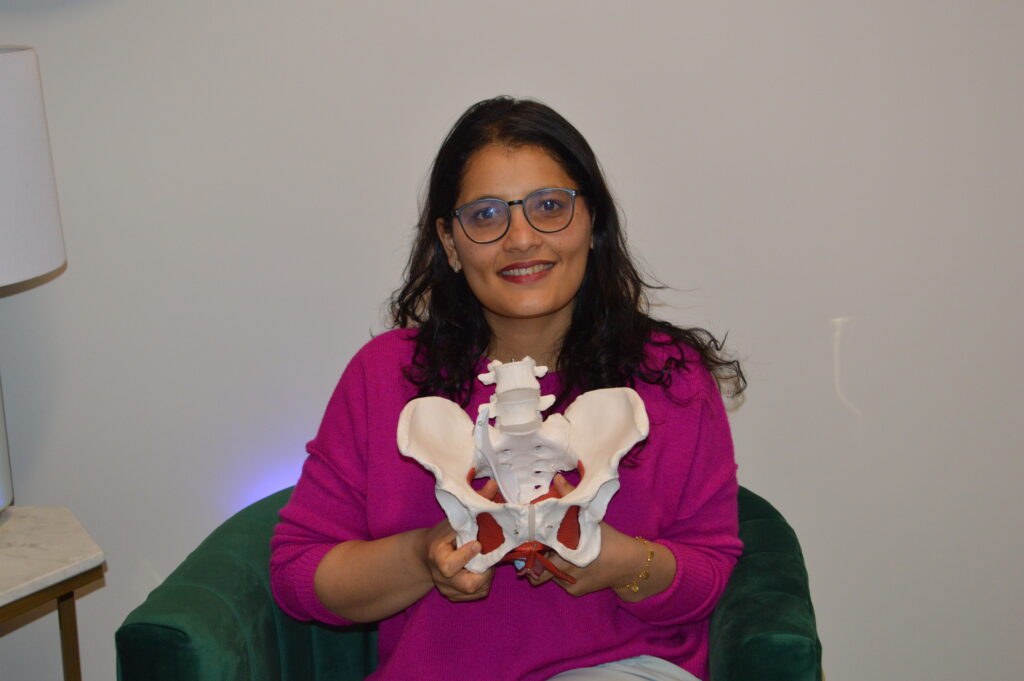
That desire first led me to specialize in women’s health and pelvic floor physical therapy. As I worked with women experiencing pelvic pain and other complex conditions, I became increasingly aware that men’s pelvic health was also profoundly underserved. Wanting to help fill that gap, I expanded my training into men’s health physical therapy as well.
My path toward specializing in Ehlers-Danlos syndrome (EDS) began unexpectedly. While treating patients with endometriosis and chronic pain, I noticed that although many were improving, something still wasn’t quite adding up. Then one patient shared their EDS diagnosis with me. As I started learning more, everything clicked—the patterns I had been seeing finally made sense.
I began to recognize what many people in the EDS community refer to as the “EDS trifecta”: hypermobility, dysautonomia, and mast cell activation syndrome. I also came to appreciate how frequently other interconnected conditions like endometriosis, gastrointestinal motility issues etc are overlooked or misunderstood within healthcare. Many patients had spent years searching for answers, often feeling dismissed, misunderstood, or told that their symptoms could not be explained.
That realization challenged me to deepen my clinical knowledge and skills. I pursued advanced training to better understand EDS, hypermobility spectrum disorders, chronic pain, and the complex systemic factors that influence health and function. The more I learned, the more I realized how limited the understanding of EDS and related conditions can be within healthcare, and how important it is for clinicians to continue learning in order to provide effective care.
Today, I am passionate about helping people with pelvic health conditions, hypermobility, EDS, dysautonomia, and chronic pain navigate complex symptoms, reconnect with their bodies, and build a path toward meaningful recovery and improved quality of life. My goal is to provide the kind of informed, compassionate care that many patients with complex chronic conditions struggle to find.